Garmin released the Zumo XT3 in February 2026. It’s a solid device — MIL-STD-810 rated, IPX7 waterproof, bright glove-friendly touchscreen, preloaded topo maps. The 4.7-inch version starts at $499.99. The 6-inch version is $599.99.
That’s a real investment in a device that runs Garmin’s software, uses Garmin’s map ecosystem, and doesn’t run the apps you’re already paying for.
More ADV and off-road riders are doing the math on that and reaching a different conclusion than they might have five years ago. This post covers what that alternative looks like, what you give up, and whether it makes sense for how you actually ride.
What Dedicated GPS Units Do Well
This isn’t a hit piece on Garmin. Let’s start with what you’re actually getting for $500.
The Zumo XT3 is purpose-built for motorcycle mounting. It handles vibration, rain, and temperature extremes without any of the setup considerations a tablet requires. Preloaded street and topo maps work out of the box — no app setup, no Google account, no configuration session before your first ride. Garmin’s Adventurous Routing finds twisty, scenic roads automatically. The 2026 XT3 adds real-time lean-angle display, G-force data, and tighter integration with the Tread app. For riders who want a device that’s plug-and-play and want to stay inside Garmin’s ecosystem, it earns its price.
The Tread 2 SxS Edition at $999.99 is a more robust option for off-road vehicle use specifically, with pitch-and-roll sensors, ABC sensors, and preloaded trails.
These are competent, purpose-built devices. The question isn’t whether they work — it’s whether the tradeoffs match your riding setup.
The Three Things Dedicated GPS Units Can’t Do
They can’t run your apps. If you’ve spent a season building waypoints, saving tracks, and joining a riding community inside onX Offroad or Gaia GPS, none of that transfers to Garmin. The Garmin ecosystem is self-contained — which is powerful if you’re starting from scratch, but a real friction point if you already have an established app stack.
ADV riders increasingly choose Gaia GPS for its topo depth and GPX flexibility. BDR (Backcountry Discovery Route) route files, user-generated trail content, imported GPX files from ride partners — all of this lives in apps that don’t run on dedicated GPS units.
The screen is smaller than it used to seem. At 6 inches, the Zumo XT3 is competitive with the top of its category. Compared to an 7 inch Android tablet, it shows you significantly less map at any given zoom level. On long-route navigation where you want to see several trail intersections ahead, the size difference is material.
Updates depend on Garmin’s schedule. Trail data, map layers, and routing logic update when Garmin publishes them. Navigation apps like onX and Gaia push updates continuously based on user contributions and satellite data. For rapidly changing off-road trail data — new closures, reroutes, access changes — app-based navigation tends to be more current.
What Riders Are Using Instead
The shift isn’t toward phones. Phones have the same heat, vibration, and battery drain problems they’ve always had on bikes — a motorcycle-specific rugged tablet solves those.
The combination that more ADV and off-road riders are running:
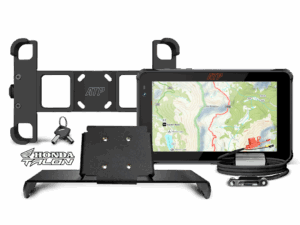
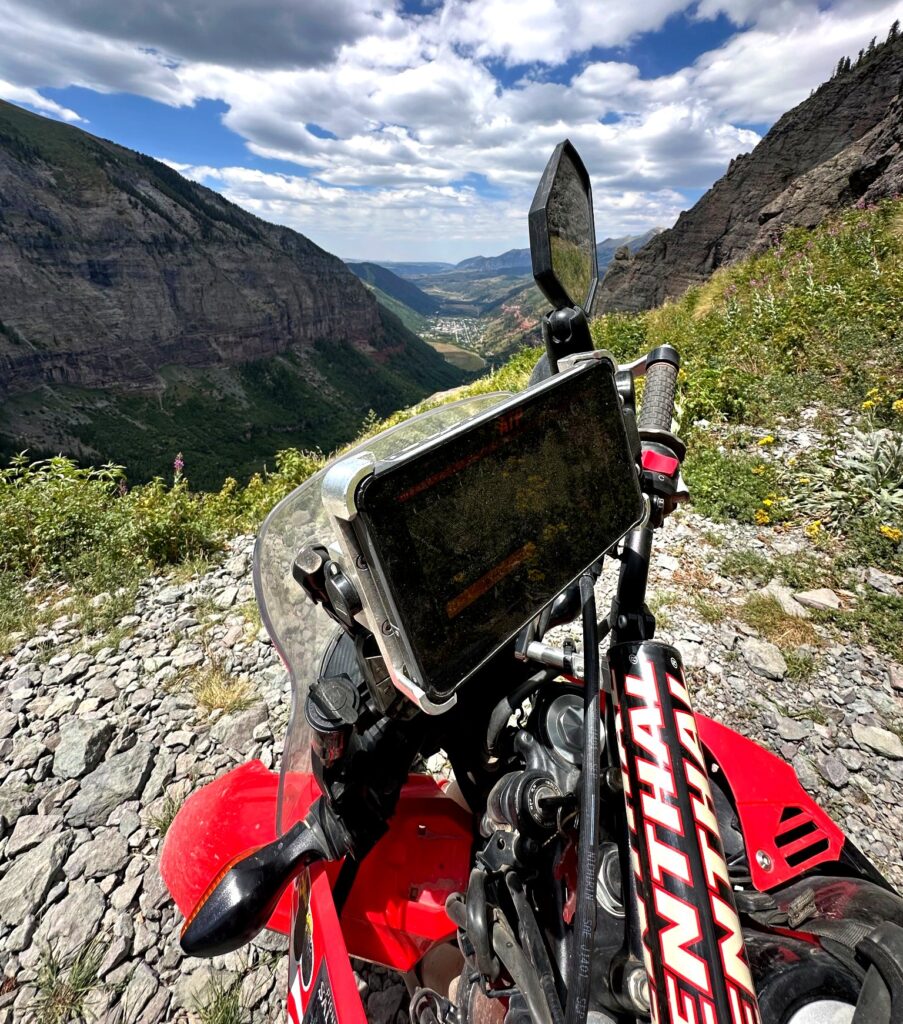
A purpose-built rugged Android tablet — bright enough to read in sun (the ATP Rugged runs at 2,600 nits, compared to the XT3’s display which Garmin rates as “bright” without publishing a specific nit count), running the navigation app of their choice, mounted in an AMPS-pattern handlebar or fairing bracket.
For BMW riders specifically: The WunderLINQ controller by Black Box Embedded adds a layer of motorcycle integration that no other setup can match — connecting the tablet to the bike’s CAN bus and surfacing vehicle data (speed, fuel level, gear position) directly in the navigation interface. That combination — ATP Rugged tablet + WunderLINQ controller — is what the ATP BMW Integration Kit is built around.
The appeal is straightforward: the app ecosystem you’ve already invested in, on a screen that’s larger and brighter than a dedicated GPS, at a price point that’s comparable to or lower than Garmin’s top-of-line units.
See the ATP BMW Integration Kit — built for ADV riders who want more than a dedicated GPS
The Honest Tradeoffs
Switching from a dedicated GPS to a tablet-based setup isn’t without real considerations.
Power. A dedicated GPS unit runs on its own battery for hours. A navigation tablet running full-brightness GPS navigation needs hardwired power for a full day’s ride. On most ADV bikes, this means a Pogo Pin hardwire connection to the accessory circuit — it’s a clean install on most bikes, but it’s an install step a dedicated GPS doesn’t require.
Mounting vibration. Motorcycle vibration is harsher than UTV vibration at the display level because it’s more consistent and higher frequency on many platforms. This isn’t a showstopper — vibration-dampened handlebar mounts are well-established in the ADV aftermarket — but it’s worth specifying dampening hardware correctly. Cheap rigid mounts can affect display connections over time.
Screen size versus cockpit space. A 10-inch tablet is imposing on a smaller adventure bike’s cockpit. An 7-inch format is more practical for most ADV setups. Consider what you’re giving up in sightlines and wind resistance before sizing up.
Learning curve. A dedicated GPS is plug-and-play. A tablet requires Android/Google configuration, app setup, and a first-time offline download session. This is a one-time investment, but it’s real time for a rider who wants to start navigating immediately.
When a Dedicated GPS Still Makes More Sense
Some riders are better served by a dedicated unit.
If you don’t have an established app stack, don’t want to think about Android configuration, and primarily ride roads with some gravel — a Garmin XT3 is a cleaner experience. The Adventurous Routing feature is genuinely good for paved and light-gravel adventure touring, and the $499 entry point is reasonable for what you get.
If you want satellite communication integration — Garmin’s inReach pairing with the XT3 for two-way messaging and SOS is a genuine safety feature that the ATP tablet doesn’t replicate natively. Riders going into very remote terrain who want that communication layer may find the Garmin ecosystem worth staying in for that reason alone.
If you want lean-angle data and ride telemetry — the XT3’s new performance tracking features are interesting, and if you’re running track days or want that data logged, Garmin has a head start.
For everything else — serious trail riding, BDR-style routes, off-road navigation in the Southwest, riding with a group that already uses onX — the tablet setup gives you more screen, more app freedom, and comparable or better off-road navigation capability for a comparable price.
The Setup Worth Looking At
For ADV and off-road motorcycle riders evaluating a tablet-based navigation setup, this is what the practical stack looks like:
Hardware: ATP Rugged tablet in an AMPS-compatible handlebar or crossbar mount. Hardwired USB-C power to the accessory circuit. Security cable through the mount bracket.
Navigation: Gaia GPS Premium for primary navigation (best topo depth, best GPX handling). onX Offroad as secondary for property data and trail community content.
For BMW riders: ATP BMW WunderLINQ Integration Kit — connects the tablet to the R1250GS or R1300GS CAN bus for vehicle data in the navigation interface. See [ATP Rugged Tablet for BMW Motorcycles — WunderLINQ Integration] for the full setup.
Offline preparation: Download your ride regions the night before. At a minimum, 500MB–1.5GB per riding area in Gaia at high detail. See [How to Set Up Offline Maps for Trail Riding] for the full walkthrough.
What it has is a larger screen, the navigation app your group already uses, and the flexibility to run anything else Android offers without waiting for a firmware update.
Frequently Asked Questions
What’s the best alternative to Garmin GPS for motorcycle navigation?
A purpose-built rugged Android tablet with AMPS-compatible motorcycle mount hardware and a navigation app like Gaia GPS or onX Offroad. Compared to the Garmin Zumo XT3 ($499–$599), a rugged tablet setup offers a larger screen, full app flexibility, and comparable off-road navigation capability. The tradeoff is that it requires hardwired power and initial setup time that a dedicated GPS unit doesn’t.
Can I use Gaia GPS on a motorcycle without a phone?
Yes, if your device has a standalone GPS receiver. The ATP Rugged tablet has a built-in multi-GNSS GPS that acquires satellite position independently — no phone pairing, no cell signal required. Download Gaia GPS from the Play Store, complete your offline map downloads, and navigate fully off-grid.
How do I mount a tablet on an ADV motorcycle?
AMPS-pattern handlebar mounts and crossbar mounts are the standard approach. The AMPS bolt pattern (30mm × 38mm) is compatible with most ADV-spec mount hardware from RAM Mount and similar brands.
Is a tablet or a Garmin better for BDR routes?
For Backcountry Discovery Routes specifically, a tablet running Gaia GPS is generally the stronger choice. BDR route files are distributed as GPX files, which import cleanly into Gaia. Gaia’s topo depth on BDR terrain is excellent. Garmin’s routing can handle imported GPX files, but Gaia’s offline coverage and user-contributed trail data tends to be more current for BDR-specific trail systems.
Does the ATP Rugged tablet work with WunderLINQ?
Yes. The ATP BMW WunderLINQ Integration Kit is specifically designed for this combination — the WunderLINQ controller interfaces with compatible BMW R-series motorcycles via CAN bus and passes vehicle data to the ATP tablet. See [ATP Rugged Tablet for BMW Motorcycles — WunderLINQ Integration] for the complete setup guide.